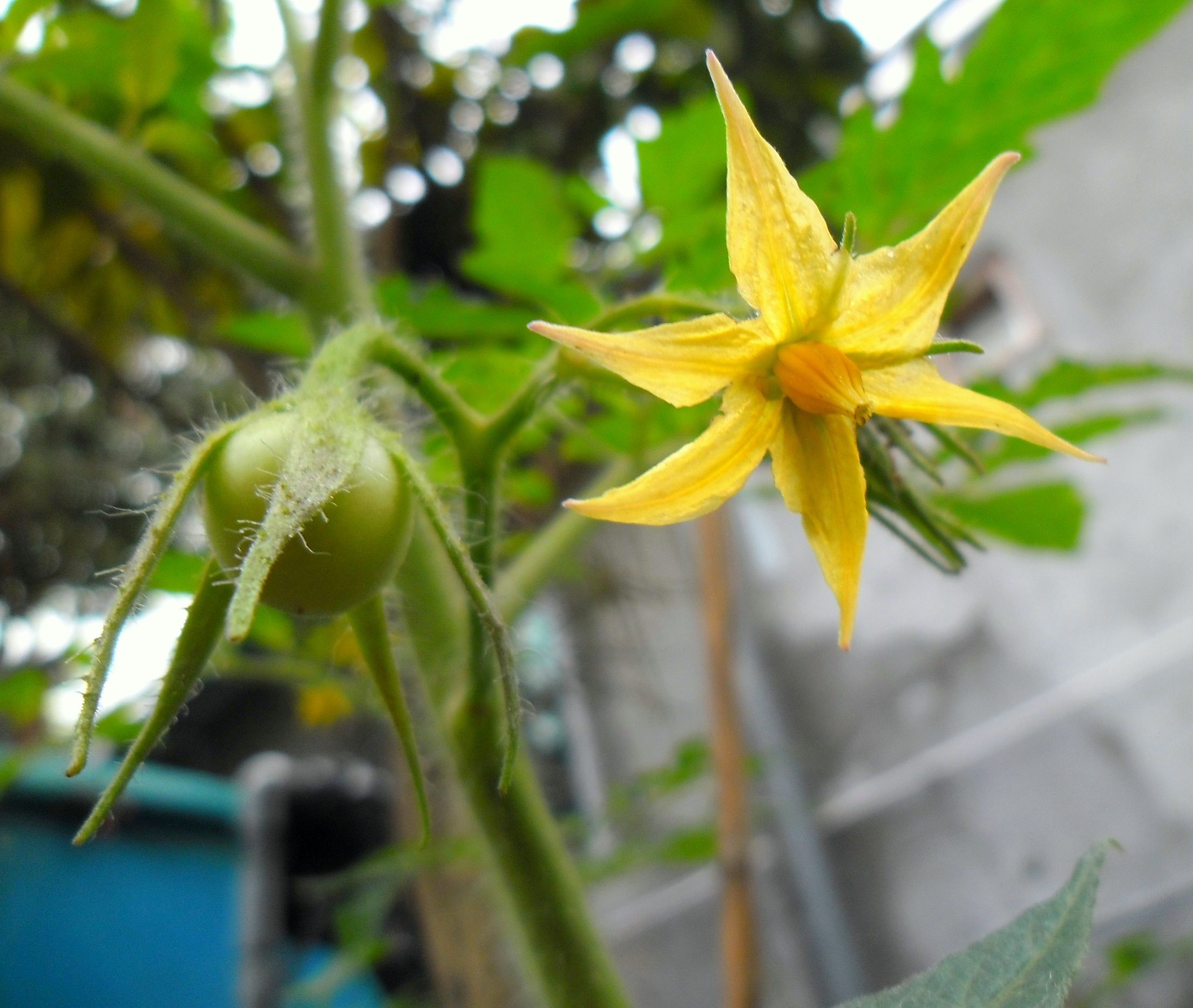
I'm trying to do this thing right this year. So I looked up how and when to feed tomatoes. First thing I noticed is that Tomatoes, Peppers, and Eggplant need similar nutrients and soil conditions. That means when it comes to rotating crops, I'm more limited than I thought. Darn. They should be rotated with legumes, leafy greens, and root vegetables in a four year cycle. But since our garden is 70% tomatoes and peppers that creates a hiccup for me. I guess next year it needs to be 70% green beans. Lettuce doesn't do that well in the hot sun in the summer. I wonder if growing kale all winter counts... Growing legumes, particularly, returns nutrients to the soil for tomatoes.
The first fertilization needs to happen when the plants set their first fruit. That would be now. (Aren't the tomato blossoms pretty?) And then again every 4-6 weeks thereafter.

So while I see the wonderful benefits of MiracleGro, I would prefer to do as much organic gardening as possible. MiracleGro has an organic fertilizer, but I'm pretty sure it is aged chicken manure and bone and feather meal, and I hate to pay extra for poop--poop I have piles of already, for that matter! But balance is important. Unless it is leafy greens you want to harvest, too much nitrogen (in other words, too much manure) makes the plant lush and leafy but doesn't make it produce more fruit.

Tomatoes need a balance of nitrogen, phosphorus, and potassium. One site recommended a compost tea or comfrey tea to feed with. (Comfrey? The herb I use in my healing salve? who knew? I'm pretty sure compost is cheaper though.) So, what needs to be in my homemade compost tea to have balanced nutrition? Since I haven't planned ahead, I might have to spring for the organic fertilizer for this feeding and then use the compost tea next time. Espoma Tomato-tone looks like another good option.
Harvesttotable.com says "For higher yields of fruiting crops such as tomatoes and peppers, extra phosphorus and potassium should be given after flowering and fruiting." Hmmm....
This site also says, "Foliar feeding. Vegetables can take a limited amount of nutrients in through their leaves; this is called foliar feeding. Use a watering can with a fine rose and foliar feed with compost tea, comfrey tea, or seaweed extracts." Ooh cool!
We mulch with wood mulch to reduce weeds and retain moisture, but mulch has to be pulled aside for fertilizing directly on soil. Dry fertilizer should be watered immediately afterwards.

Apparently bananas have everything a tomato needs. They are the match made in heaven, the id and the ego, the yin and the yang.... Potassium, phosphorus, calcium. So if you didn't know this and failed, like I did, to save all your banana peels chopped by your food processor in a freezer bag or in a compost pile to add to the soil of your garden before you planted, there is still a way. You can chop, bake and sprinkle them around the plants like you would dry fertilizer. Or you can make compost tea out of them. You can add other good stuff like egg shells and coffee grounds. Basically, you dry your egg shells with a quick bake in the oven, then crumble them. Save tea and coffee solids, and add chopped banana peel. You can add some liquid kelp or seaweed to give them more microbes for breaking down nutrients quickly. Let stand 2-3 days then strain and water the plants or spray their leaves with it.
Or here's a fun one: Banana Peel fertilizer spray (with egg shell and epsom salt). http://www.littlehouseliving.com/banana-peel-plant-fertilizer-spray.html
The Foliar spray options sounds good to me because then I don't have to move any mulch. I'm pretty sure I have thrown away an entire garden's worth of fertilizer this year. Well, probably most of it went to the chickens or pigs, so it wasn't a total waste.
Guess what we're having for a snack today!

No comments:
Post a Comment